



































We all know sleep is important. But what if we told you that how well you sleep today could directly affect how young your brain stays tomorrow?
That’s exactly what a new study from the University of Florida suggests, and it could reshape the way we think about aging.
The Link Between Sleep and Brain Age
In this two-year study, researchers tracked 197 adults, many of whom had chronic pain or were at risk for osteoarthritis. Using MRI scans and machine learning, scientists estimated each participant’s “brain age” and compared it to their actual age. The difference, called the brain age gap, was used to assess how healthy their brains really were.
Here’s what they found:
-
People who reported better sleep quality, less sleep disturbance, and fewer stressors had brains that looked up to 8 years younger than their actual age.
-
Participants with healthy habits, like maintaining a lower waistline, avoiding tobacco, and staying socially connected, also aged more slowly neurologically.
-
Meanwhile, those experiencing poor sleep, chronic pain, or high stress tended to show accelerated brain aging.

Why This Matters
Your chronological age is something you can’t change. But your brain age? That’s something you can influence and sleep is one of the most powerful levers.
This study reinforces what sleep scientists have long believed: restorative sleep is essential for brain regeneration, stress regulation, and even emotional resilience.
Small Sleep Habits That Make a Big Difference
Improving your sleep doesn’t require a complete lifestyle overhaul. Try incorporating these science-backed tips:
-
Stick to a routine: Sleep and wake at the same time daily.
-
Create a sleep sanctuary: Keep your bedroom dark, quiet, and cool.
-
Cut screen time: No phones or laptops 30–60 minutes before bed.
-
Watch your caffeine: Avoid coffee or energy drinks after 2 PM.
-
Go easy on alcohol: It may help you fall asleep, but disrupts deep sleep.
-
Wind down: Gentle stretches, reading, or breathing exercises can help calm your nervous system.
And here’s one more tip that could truly change the game…

How Slumblr Pillows Support Brain-Healthy Sleep
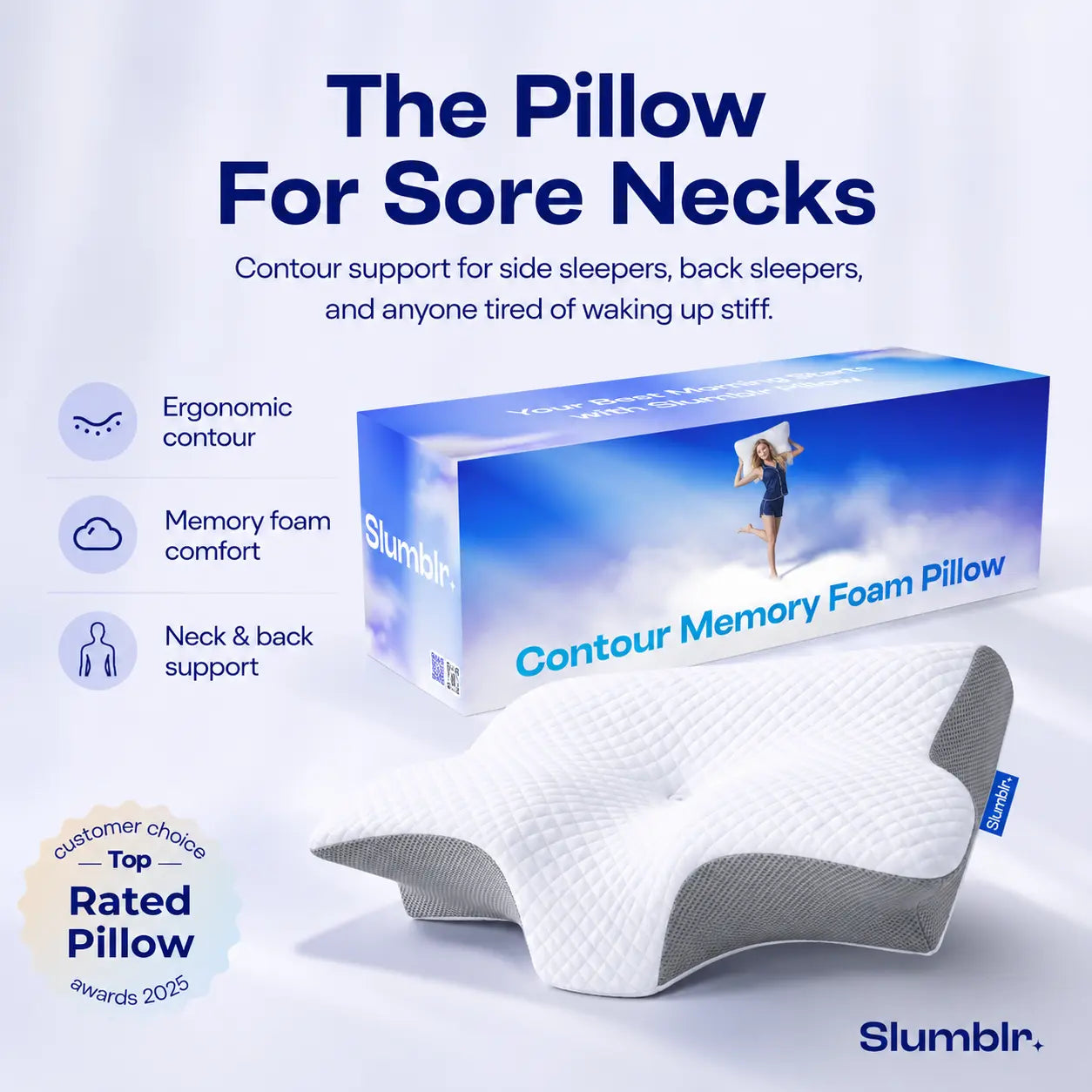
It’s not just about when you sleep, how you sleep matters too. At Slumblr, we design ergonomic memory foam pillows specifically to support spinal alignment, muscle recovery, and full-body relaxation, all crucial for reaching the deep, restorative sleep your brain needs.

Here’s how Slumblr can help:
-
Neck & Spine Support: Our contour pillows keep your neck aligned to reduce tension and prevent nighttime strain.
-
Back & Shoulder Relief: Side and back sleepers benefit from the gentle shoulder cutouts and supportive foam core.
-
No More Tossing & Turning: Our shape-retaining foam helps reduce sleep disruptions, improving overall sleep quality.
-
Comfort That Lasts: Slumblr pillows are built to last, maintaining their form and support for years, not months.

If you're serious about improving your brain health through better sleep, start with the one tool you use every night: your pillow.





Leave a comment
This site is protected by hCaptcha and the hCaptcha Privacy Policy and Terms of Service apply.