





























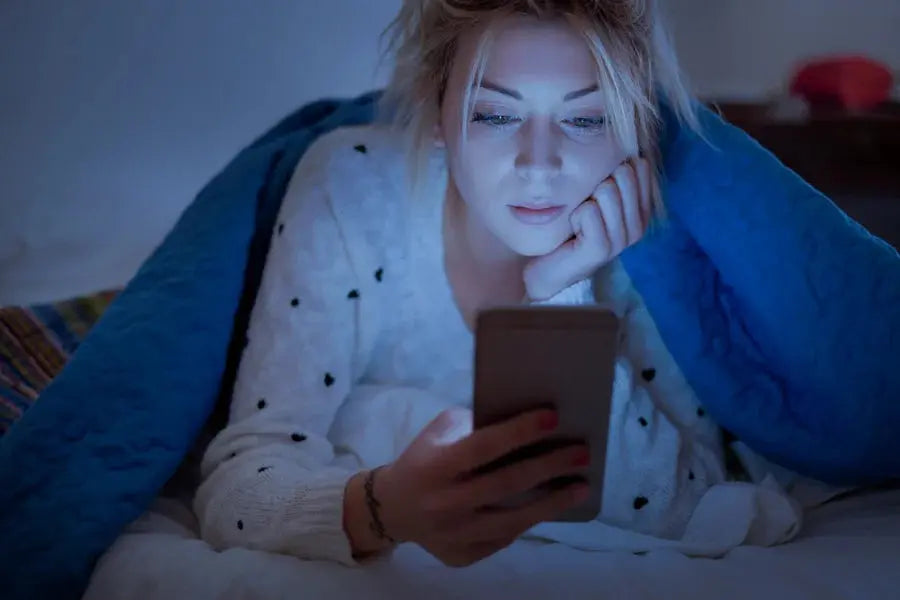
Blue light gets a lot of attention, and for good reason. From morning daylight to the phones, tablets, and televisions many people use at night, blue light is everywhere. It plays a major role in how alert you feel and when your body starts getting ready for sleep.
That is why blue light matters so much at bedtime. The issue is not that blue light is bad on its own. The real issue is timing. During the day, blue light helps keep your body clock on track. At night, too much of it can make it harder to wind down and fall asleep.

What Is Blue Light?
Blue light is part of the visible light spectrum.
Different colors of visible light have different wavelengths. Blue light has shorter wavelengths than colors like red and orange, and that helps explain why it has such a strong effect on alertness and body timing.
Sunlight is the biggest source of blue light. Even though daylight looks white to us, it contains a large amount of blue light. That exposure helps your body recognize that it is daytime.
Why Blue Light Affects Sleep
Blue light helps regulate your circadian rhythm, which is your internal body clock.
When light enters the eyes, it sends signals to the brain that help tell the body whether it should feel alert or sleepy. Blue light is especially effective at supporting those daytime signals. It helps delay melatonin, which is the hormone that helps you feel sleepy at night.
So blue light does not exactly wake you up the same way a loud noise or a cup of coffee might. What it does is tell your body that it is still daytime, which can push sleepiness later.

Why This Matters More at Night
During the day, blue light is useful. It helps support alertness, mood, and a healthy sleep wake rhythm.
At night, the same light can become a problem.
If your brain keeps getting strong light signals in the evening, it may delay melatonin and make it harder for your body to shift into sleep mode. That can lead to falling asleep later, feeling less sleepy at bedtime, and sometimes sleeping less overall.
Where Blue Light Comes From
A lot of people think of phones first when they hear about blue light, but devices are not the only source.
Sunlight is still the biggest source
The sun is by far the strongest source of blue light. Daylight gives your body an important signal that helps keep your internal clock aligned with the day.
This is one reason morning light exposure is so helpful. It strengthens the body’s sense of daytime and can make the sleep wake cycle more stable.
Indoor lighting also matters
Household lighting can affect your body more than people realize. Many homes now use LED bulbs, which can emit more blue light than older styles of lighting.
Even if your evening lights do not look blue, they can still contain blue wavelengths that affect how alert your body feels at night.
Screens add another layer
Phones, tablets, laptops, and televisions also expose you to blue light. On top of that, they tend to keep your mind engaged, which can make bedtime even harder.
That means evening screen use can affect sleep in two ways. The light itself can delay sleepiness, and the activity on the screen can keep your brain stimulated.

Why Evening Blue Light Can Be So Disruptive
Many people now spend less time in bright outdoor light during the day and more time under indoor light at night.
That can create a difficult pattern. Your body may not be getting strong enough daytime light cues, but then it gets extra alerting light in the evening when it should be winding down.
In simple terms, the signals get mixed up. The body starts getting less help knowing when it should feel awake and when it should feel sleepy.
What Matters More Than the Color You See
One important point is that perceived color is not the whole story.
A light may look warm or yellow to you, but that does not always mean it has no effect on sleep. Brightness matters too. Light intensity and timing both influence how strongly your body responds.
That is why reducing evening light overall can help, not just switching to a different color bulb.

How to Keep Blue Light From Affecting Your Sleep So Much
The goal is not to avoid blue light completely. The goal is to get more of it when it helps and less of it when it gets in the way.
Get more daylight during the day
This is one of the most useful steps.
Strong daylight exposure, especially in the morning, helps reinforce your body clock. When your body gets a clearer signal that it is daytime, evening light may have less of an effect.
Try to get outside in the morning if possible, even for a short time. Daylight during the day supports better sleep later.
Lower evening light levels
A brighter home in the evening can keep your body more alert than you think.
Dimming lights at night, using softer lamps, and reducing overhead lighting can help create a better transition toward sleep. A darker environment sends a clearer signal that the day is ending.
This is also where simple blackout support can help. The Slumblr® Blackout Adjustable Sleep Mask fits naturally into an evening routine when ambient light in the room makes it harder to settle down. Its 3D contoured shape is designed to block surrounding light while resting comfortably without pressing inward against the face, which can make it easier to create a darker and calmer sleep environment at home, during naps, or while traveling.

Be more intentional with screens
Using screens right before bed can make it harder to wind down.
It helps to stop using phones, tablets, and laptops earlier in the evening when you can. If that is not realistic, night mode filters may still help reduce the impact. Even so, what you are doing on the screen matters too. Reading stressful messages or scrolling endlessly can keep the mind active long after you put the device down.
Do not reach for your phone during the night
If you wake up in the middle of the night, checking your phone is one of the least helpful things you can do.
That sudden light exposure can make it harder to fall back asleep, especially when your body is already meant to be in a dark environment.
Consider blue blocking glasses if needed
Some people use blue blocking glasses in the evening to reduce exposure from both devices and room lighting.
They may be helpful in some situations, especially for people who are highly sensitive to evening light or who have to use screens later than they would like.
Still, they are only one part of the picture. They do not solve the mental stimulation that comes from staying online late.
Travel and Temporary Sleep Spaces Matter Too
Blue light is not just a home problem. It can also become more noticeable in travel settings, especially in RVs or mobile spaces where outside light and open surroundings can make it harder to create a darker sleep environment.
That is where the Slumblr® Foldable Magnetic Blackout Window Cover can be useful. Its magnetic attachment design allows quick placement on metal window frames without tools or permanent setup, and the layered blackout fabric helps reduce light penetration while creating a more private and enclosed interior feel. For people sleeping in RVs or other travel spaces, that kind of blackout coverage can make it easier to limit unwanted evening and early morning light.

Blue Light Is Not All Bad
Blue light is often discussed like it is the enemy, but daytime blue light is actually helpful.
It supports alertness, mood, and a more stable body clock. Morning light is especially important because it helps tell your body that the day has started.
The problem is not blue light itself. The problem is getting too much of it at the wrong time.
Special Considerations for Kids
Children can be even more sensitive to evening light than adults.
Their eyes may let in more light, which means nighttime light exposure can have a stronger effect on melatonin and sleepiness. That is one reason consistent bedtime routines and lower evening screen exposure can be especially important for kids.
Even small amounts of light in the evening can matter.

Practical Tips for Better Sleep Around Blue Light
If you want to reduce the effect of blue light on sleep, start here:
- get more outdoor daylight during the day
- try to get morning light when possible
- dim household lights in the evening
- reduce screen time before bed
- use night mode on devices if needed
- avoid checking your phone during the night
- keep the bedroom darker at bedtime
- use blackout support when ambient light is hard to control
- build an evening routine that feels less stimulating
Final Thoughts
Blue light affects sleep because it helps tell your body whether it is time to feel awake or sleepy. During the day, that is useful. At night, too much light can delay your body’s natural wind down process and make sleep harder.
The good news is that you do not need to fear every screen or every light bulb. Better sleep usually comes from better timing. More daylight during the day, less bright light at night, and a calmer evening routine can all help your body make the shift into sleep more easily.




Leave a comment
This site is protected by hCaptcha and the hCaptcha Privacy Policy and Terms of Service apply.